Entries by Nadia Crighton

Year-Round Tick Paralysis Threat- National Tick Awareness Month Friday 1 August

Australia – [July, 2025] – National Tick Awareness Month on Friday, 1st August, Pet Insurance Australia is urging pet owners to remain vigilant about tick paralysis in dogs and cats, even during winter, as new emergency case data and pet health trends confirm this risk persists year-round. Tick paralysis is a life-threatening condition caused by a neurotoxin […]
Spring is Coming – ACHOO – A Seasonal Warning For Pet Owners

Spring Skin Allergies & Omega-3 Care Australia – [July, 2025] – As spring brings wildflowers and rising pollen levels across Australia, Pet Insurance Australia (PIA) warns pet owners to be vigilant about rising skin allergy risks and the growing benefits of early nutritional support. According to the 2025 PetSure Pet Health Monitor1, skin conditions and allergies […]

Urgent Warning to Sydney Pet Owners as Severe Weather Elevates Leptospirosis Risk and Flood Hazards

Sydney, Australia – [July, 2025] – As Sydney faces intense rainfall and flash flooding this week, Pet Insurance Australia (PIA) is urging all pet owners to take immediate action to protect their animals from rising dangers, including a surge in Leptospirosis cases and life-threatening environmental hazards. “With these unprecedented downpours, the risks to pets increase dramatically,” […]

The Importance of Early Puppy Socialisation: Building Confidence from the Start

Bringing a new puppy into your life is an exciting journey filled with cuddles, playtime, and countless memorable moments. However, amidst the joy, it’s crucial to prioritise one of the most significant aspects of your puppy’s development: early socialisation. Many new puppy owners can get a little confused due to the possible dangers socialising can […]

Understanding Puppy Teething and How to Manage It

Table of Contents

If you’re a new pet owner looking for advice on puppy teething, you’re not alone. So many new pet parents are left wondering how to help their adorable little puppy, who’s become a chewing, biting monster! 

Your puppy will experience two bouts of teething: one when its sharp 28 little milk teeth come through by 6 weeks of age, and another from 4 to 6 months when it loses its milk teeth for 42 adult teeth. No wonder it chews, chews and chews to relieve the discomfort. 

This handy guide from Pet Insurance Australia will reveal everything you need to know about the puppy teething process: symptoms, a teething timeline, how to help your pup stop destructive chewing and keep it safe, recommended puppy teething toys, long-term dental care, and when to seek advice from a vet.

Puppy Teething Symptoms

Here are the top puppy teething symptoms you need to be aware of:

  • Increased chewing behaviour: If your puppy is chewing on everything it can wrap its mouth around (including your fingers and favourite pair of shoes!), it’s likely to be a symptom of teething. Puppies instinctively chew to relieve their gum discomfort. 
  • Drooling or slight bleeding: Excess drooling or slight bleeding may be experienced while your puppy’s teeth push through the gums and when they lose their milk teeth. 
  • Loss of appetite: This a common issue for teething puppies, as their mouth is too sore for them to want to chew their food (their appetite will return when the pain passes, so be patient). 
  • Mild irritability or restlessness: When your pup is in discomfort, you may notice it won’t settle and may become less tolerant of those around it. Keeping your pup calm, reassuring it, and giving it lots of affection can help it feel safe. 

All of these puppy teething symptoms are very normal. However, you should watch your pup’s mouth for any signs of infection (e.g., excessive bleeding or refusing all food). 

puppy teething 2

Understanding the Puppy Teething Timeline

If you feel like you and your home are constantly under attack from sharp needle teeth, you’re probably wondering, when do puppies finish teething?!

Here’s a puppy teething age chart to help you understand where your puppy is at:

  • Newborn (0 – 3 weeks): No teeth, as your puppy is still nursing
  • 3 – 8 weeks: 28 milk teeth erupt through their gums, and soft puppy food is introduced 
  • 4 – 6 months: Their milk teeth are pushed out by 42 adult teeth. This is when chewing escalates, and you’ll find little teeth around your home (if your pup hasn’t swallowed them!). It’s a great time to visit your vet to check the progress and ensure no issues. 
  • 7 months: All their adult teeth should be through (12 incisors, 4 canines, 10 molars and 16 premolars). This is the best time to introduce teeth brushing. 

While this is a guideline, some breeds may take longer to get through the puppy teeth stages. No matter when they reach each stage, you must give them proper teething care, provide them with loads of chew toys, and monitor their gum health to ease their discomfort.

Best Ways to Help a Teething Puppy

No matter how annoying it may seem, chewing is a natural behaviour for your puppy and should never be punished. If you catch them chewing on something they shouldn’t (like your best shoes), a simple and firm ‘No’, removing the item and replacing it with their chew toy works wonders. 

Here are some of the best ways you can help your teething puppy:

  • Cold chew toys: Chilling a puppy teething toy helps to reduce gum inflammation. 
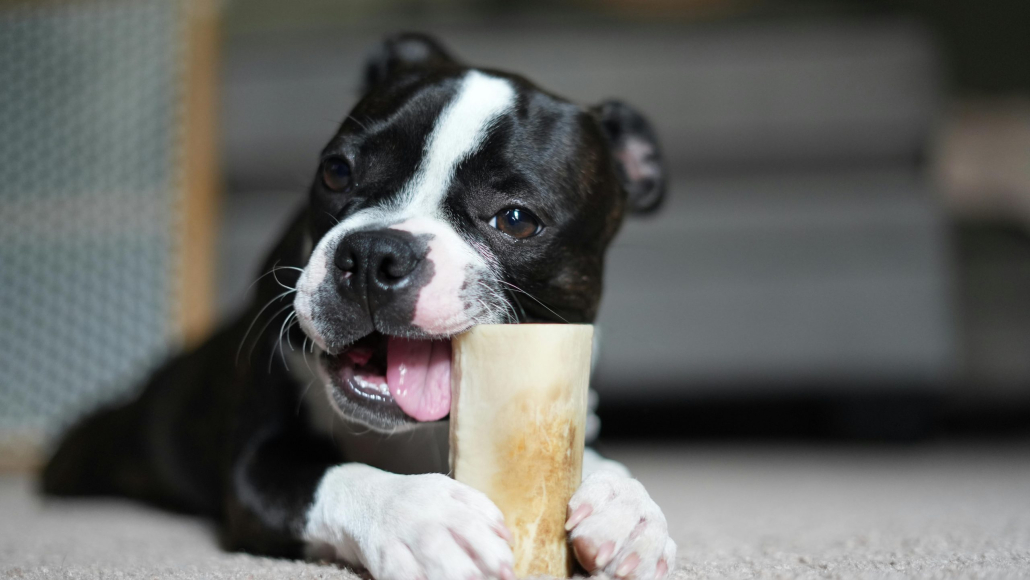
  • Puppy dental chews: A ‘treat’ alternative that helps massage their gums and aids oral health. 
  • A variety of toys: Puppies tend to get bored quickly, so offering a variety of teething toys gives them options to keep them happy and entertained. 
  • Distraction technique: Prevent unwanted chewing by distracting their attention to another toy, a game of tug of war or some cuddles on the couch.

Teaching your puppy the ‘safe’ options for chewing (e.g. NOT shoes, furniture or fingers, ha!) helps set them up for good behaviour as an adult dog.

puppy teething 3

Choosing the Right Teething Toys for Your Puppy

Choosing the right puppy teething toys is essential to keep your puppy safe. Here’s what to look for:

  • High-quality, non-toxic materials: Avoid cheap, toxic plastic toys that can be harmful if ingested.
  • Offer texture variety: Soft, rubber and rope puppy chew toys offer different sensations on your puppy’s teeth and gums, relieving gum pain and assisting loose teeth to fall out.
  • Correct size: To prevent your puppy from a choking hazard, you need to choose a chew toy that’s the right size for their little mouth (and keep puppy chew toys away from older dogs in the household).

Durability: Buying high-quality, durable chew toys will withstand rigorous chewing and not break apart to become a choking hazard.

Best Puppy Teething Toys & What to Look For

To choose the best puppy teething toys, here’s what to look for:

  • Rope toys with knots: Made from natural fibres (hemp, jute or sisal) and featuring a chewable knot, these durable toys are safe for prolonged chewing. 
  • Hard rubber: Puppies love sinking their teeth into hard rubber toys which are easy to clean (to remove slobber and dirt) and won’t break like cheap plastic toys.
  • Nylon bones: Avoid giving puppies real bones that can splinter, and choose a nylon bone instead. 

When choosing the best chew toys, select trusted brands like KONG (which also offers fillable chew toys for extra entertainment) and Nylabone.

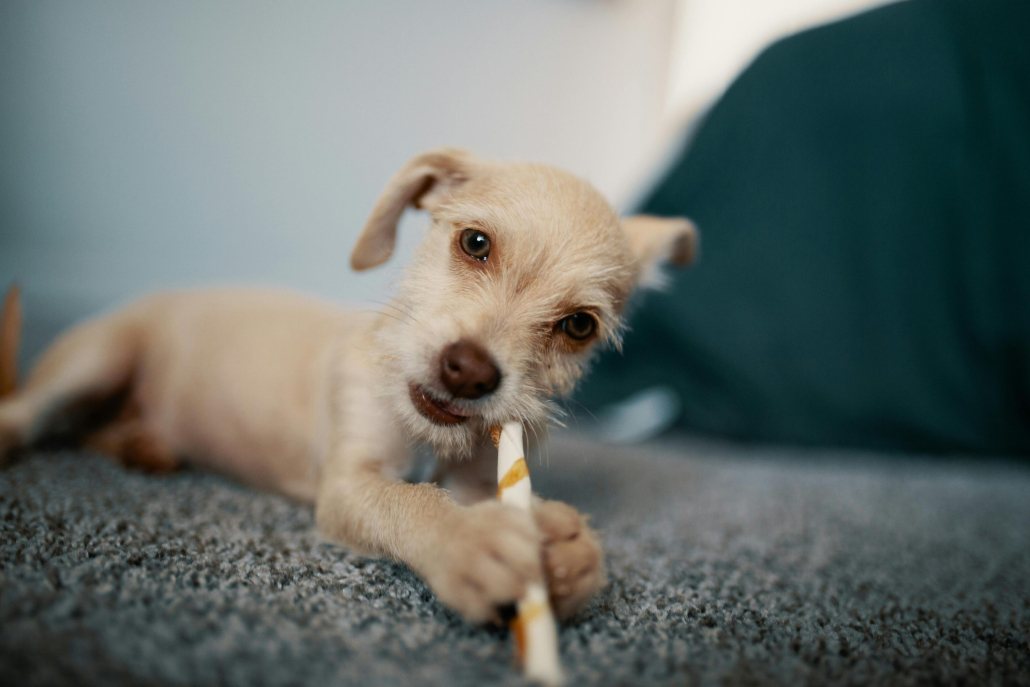
puppy chewing straw

Safe & Natural Alternatives to Chew Toys

Choosing the right material for your puppy’s chew toy is as essential as buying the right type to ensure safety, durability and comfort. 

Here are some safe and natural alternatives to puppy teething toys you can opt for:

  • Natural fibre materials: Opt for natural fibres like sisal, hemp or jute for rope toys, which should be allergen-free and gentle on your pup’s mouth.
  • Silicon toys: Puppy toys made from silicone won’t contain harmful chemicals or additives, making them a safe choice for your puppy.

Natural chews: For a healthy, fresh treat, choose natural chews that are designed for puppies, like those from Blackdog, Greenies or SavourLife.

Why Proper Dental Care Starts During Teething

While your puppy is teething, it’s a great idea to start training it in long-term oral hygiene practices. Early dental care helps prevent gum disease and oral health issues later in life. 

Here’s how:

  1. Start teeth brushing: Your puppy will love a toothbrush gently massaging their sore gums. It’s also a great way to introduce and desensitise them to teeth brushing, especially since it needs to be done regularly when they have adult teeth!
  2. Use the right toothpaste: Never use human toothpaste as it’s highly toxic to dogs, but buy a dog-friendly one from your vet or local pet supply store.
  3. Offer dental chews: Opt for natural products that massage gums, reduce tartar build-up and are easy to digest. 

Schedule vet dental checks: Once your puppy starts to lose milk teeth and grow adult teeth, it’s best to take them for a vet dental checkup so they can check for retained teeth, gum issues or any signs of infection.

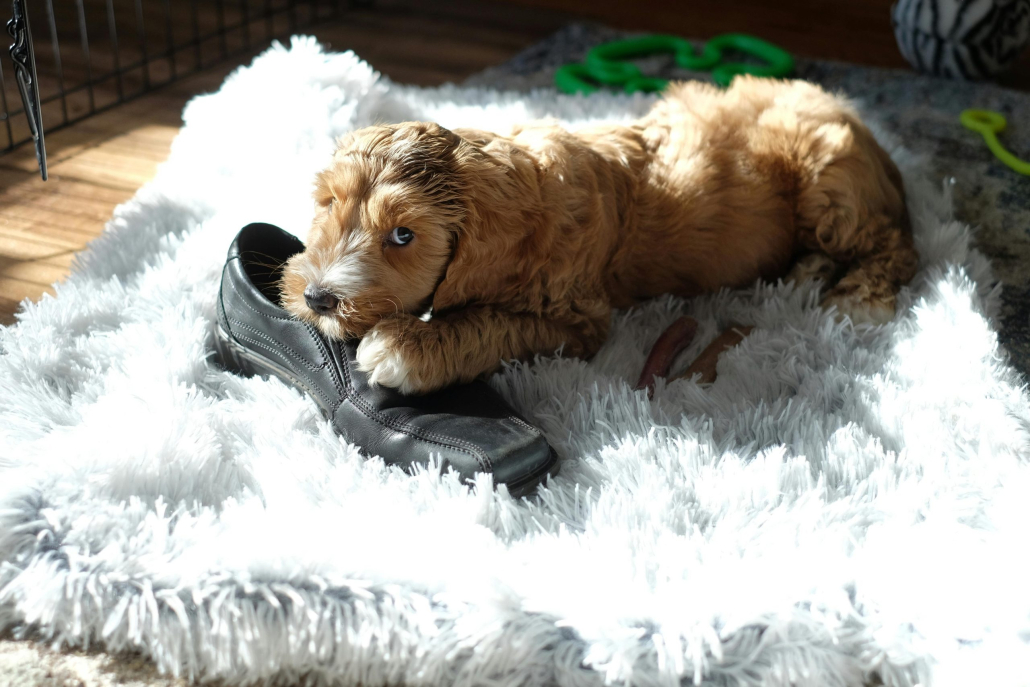
puppy chewing on shoe

How to Stop Your Puppy from Chewing on Everything

The best way to stop your puppy from chewing on everything is to use positive reinforcement training and puppy-proof your home (e.g. put away shoes). You’ll need to be very patient and consistent, but it will pay off to prevent any destructive chewing when they’re older. 

Here are some tips:

  • Positive reinforcement training: Praise your puppy for using their puppy teething toys with loads of pats, happy words, affection and playtime.
  • Use deterrent sprays: Puppy-safe deterrent sprays are useful to help prevent unwanted chewing on furniture.

Crate training: If your puppy is unsupervised, you could try crate training. This limits them to a confined area, with limited items to potentially destroy with those ‘lil shark teeth!

When to Visit a Vet for Teething Issues

While your puppy is teething, it’s best to check its mouth every few days for potential issues. 

Although a vet dental check should be scheduled around 4-6 months of age, here are other signs it may be time to visit your vet:

  • Retained baby teeth: Sometimes baby teeth don’t fall out, which leads to overcrowding, issues with eating and teeth not aligning.
  • Extreme discomfort or bleeding: If your puppy is crying when chewing or you notice excessive bleeding from their mouth, it may be a sign of an infection that needs immediate vet attention.
  • Persistent bad breath: When your puppy’s breath makes you step backwards, it may be a sign of gum disease, which will require a vet diagnosis and medication. 

Irregular adult tooth growth: If you notice your puppy is struggling to get their adult teeth to push through, you may need vet intervention to help relieve their gums.

Help Your Puppy Develop Strong, Healthy Teeth with Expert Care

These days, puppies are lucky! Advances in veterinary science and practices have significantly improved puppy teething care and oral health. 

Trusted companies (often backed by vets) have produced safe, effective puppy chew toys that relieve puppies from teething discomfort. The variety allows you to choose natural products that are safe for your puppy and treats that soothe gums while being easy to digest for young bellies. 

Your vet is on hand to perform regular dental checks and offer advice on the best puppy diet, teeth cleaning products and chew toys to help you manage your puppy’s teething stage (and beyond).

Use this stage to bond with your puppy, comfort them, and get them used to oral care. 

Doing this will help you reduce the risk of dental issues in the future, which is a wise investment for you as a pet parent.

How to Teach Your Puppy to Stop Biting: A Step-by-Step Guide

Puppy teeth may be tiny, but those little nips can cause significant problems! Not to mention how well those razor-sharp teeth can certainly leave a mark. Whether your pup is teething, playing, or testing boundaries, biting is a common behaviour that needs correcting early. In this step-by-step guide, Pet Insurance Australia will walk you through […]