
German Shepherd Dog Breed
German Shepherds are among the most loyal and devoted dogs in the world. Right from the beginning, they have a strong desire to please their owners and are well-known for their excellence as watchdogs, guide dogs, or general working dogs! In this blog, we’re going to break down some German Shepherd facts and help you decide if this is the breed for you.
Quick Links:
- German Shepherd Characteristics
- German Shepherd Origin
- German Shepherd Personality
- German Shepherd Appearance
- Adopting a German Shepherd
- How much does a German Shepherd Cost?
- German Shepherd FAQs
- Additional Resources on German Shepherds
If you prefer visual learning and want to learn more about the history, living requirements, and trainability of the German Shepherd, we have provided a brief yet informative video link below:
GERMAN SHEPHERD CHARACTERISTICS
| Life Span: 10-13 Years | Grooming: Extensive | Child Friendly: Yes | Tendency to Bark: High |
| Health Issues: Moderate | Shedding Level: High | Apartment Friendly: No | Playfulness: High |
| Energy Level: Medium | Adaptability: High | Pet Friendly: Low | Intelligence: High |
| Exercise Needs: High – Minimum of 2 hours per day | Social Needs: Moderate | Affection Level: High | Trainability: High |
GERMAN SHEPHERD ORIGIN
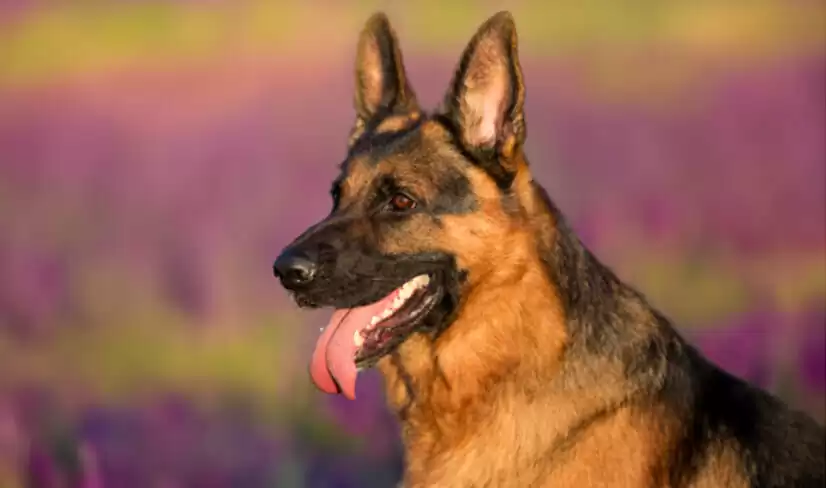
The German Shepherd’s history, as the name suggests, began in Germany around the late 1800s. They were originally bred in the hopes of achieving the ‘perfect herding dog’ – to herd and protect flocks of sheep in the German countryside.
Here are some fast facts about the German Shepherd’s history:
- German Shepherds were originally regarded strictly as working dogs during the early days of the breed; nonetheless, they were not commonly kept as household pets. In spite of this, their owners would still provide them with food and shelter.
- Subsequently, they gained popularity as family dogs after World War I due to their loyalty and commitment to their owners. Furthermore, German Shepherds are estimated to have started their police service in Europe around 1910 and gained popularity as hard-working service dogs after World War I.
- Notably, both terms, ‘German Shepherd’ and ‘Alsatian,’ are still in use today, despite temporarily replacing the breed name during both World War I and World War II.
GERMAN SHEPHERD PERSONALITY
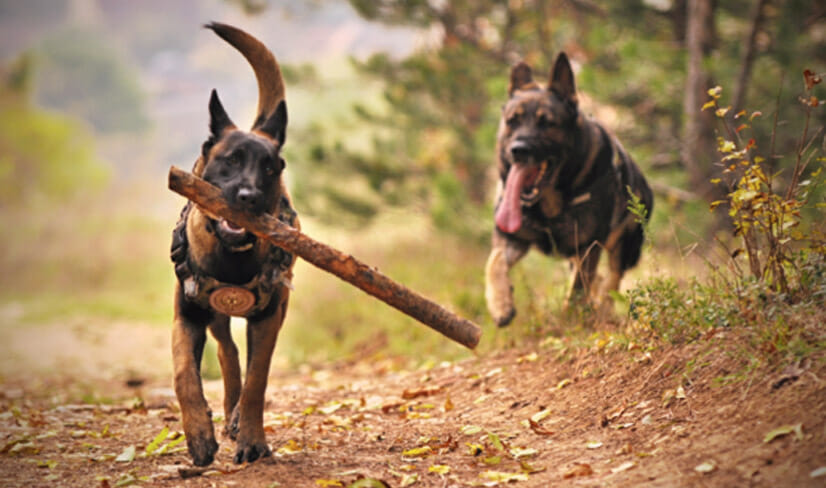
German Shepherds, as a breed, are fiercely loyal and devoted to their families. They’re playful dogs at any age, and they enjoy spending time outdoors. They are intelligent and can be easily trained; however, if not trained properly, they can become stubborn in their behavior. Additionally, like all dogs, this breed has its own distinct and unique temperament traits that should be considered before adoption.
Here are some of the key personality traits of German Shepherds:
- Protectiveness – some German Shepherds may display behaviour relating to over-protectiveness over their owners and their territory. Training from an early age can help curb this habit.
- High levels of intelligence – German Shepherds are known to be easy to train. If sourced from a responsible breeder, these dogs are confident and take to any training regime without much trouble.
- They’re one of the most playful breeds. German Shepherds are excitable and eager. They play well with the other pets that they’re raised alongside; however, they can be a little bit rough during playtime without meaning to be.
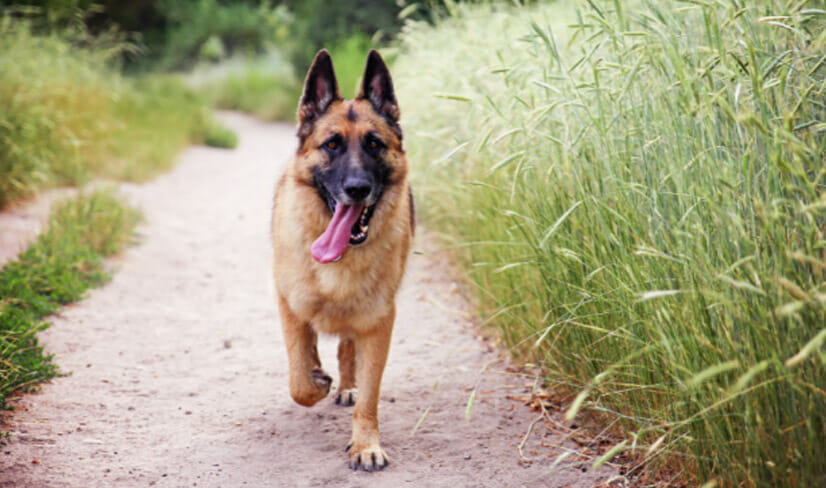
- They’re exercise-oriented dogs. This can be explained by the breed’s original purpose, as German Shepherds have a natural inclination to run around and actively engage in outdoor physical activities. They are pets that prioritize their families. If raised as social dogs from an early stage, German Shepherds get along wonderfully with children. However, due to their guarding instinct, these canines tend to be distrustful of strangers.
GERMAN SHEPHERD APPEARANCE
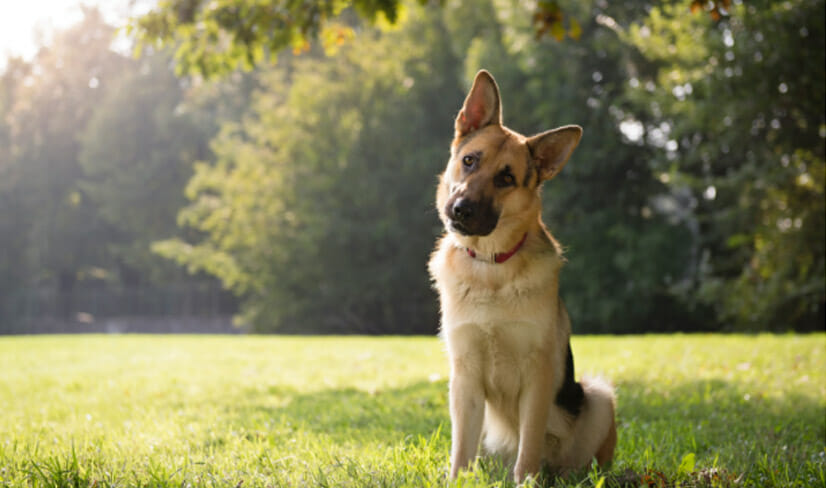
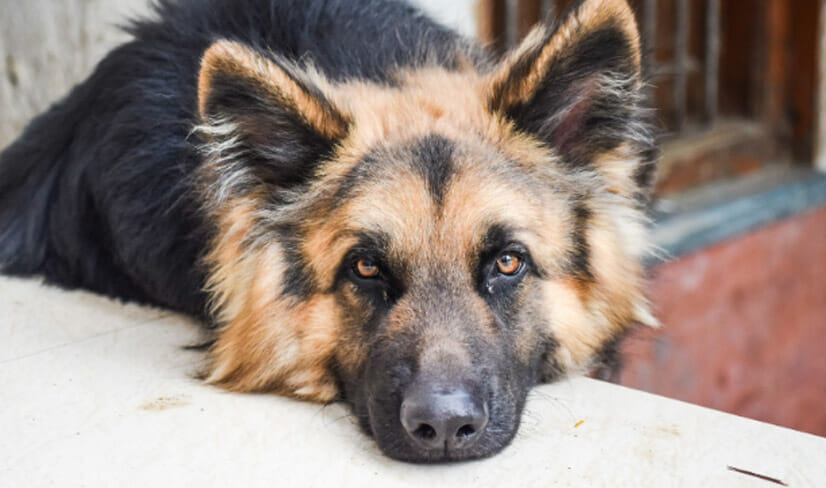
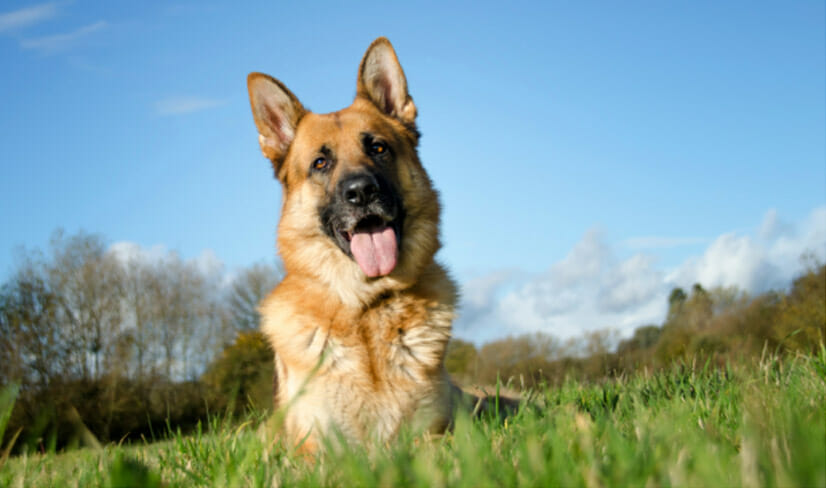
German Shepherds have been described as ‘wolf-ish’ looking dogs, and they possess trademark features, including naturally upright ears, bushy tails, and sable coats. While males and females share similar heights and weights, it’s worth noting that males typically have a larger size. The physical appearance of a German Shepherd can vary based on the specific variant and breeder they come from.
Here’s a quick run-through of the German Shepherd’s most defining features:
- Pointy ears – Most German Shepherds are born with soft, floppy ears. After around 5 months, their ears begin to naturally perk up – becoming pointy and upright, a key trademark characteristic of this breed.
- Straight muzzle – German Shepherds have long and straight muzzles. Their noses are typically black and square-shaped, becoming more defined as they age.
- Almond-shaped eyes: German Shepherds are beloved for their dark and expressive almond-shaped eyes.
- Bushy, sabre-shaped tails: These dogs are born with long, bushy tails that have a slight hook at their end, resembling the shape of a sabre.
- Coat variety – Some German Shepherds may appear with different coat lengths and textures. These may range from short and coarse, to long and fluffy.
The coat colors of German Shepherds are known to include:
- Sable
- Black and Tan
- Black and Cream
- Black and Red
- Black and Silver
- Black and Bi-colour
- White
- Black
Interestingly, white German Shepherds are the least desirable variant within the breed. Black German Shepherds are regarded as the rarest and highly sought after among the breed.
You can read more about the German Shepherd’s coat colours here.
ADOPTING A GERMAN SHEPHERD
When it comes to looking at German Shepherds for sale, it’s important to keep a few key factors in mind. When looking for German Shepherd Breeders in Australia, make sure to keep an eye out for:
- Breeders with trusted reviews and a long history.
- Breeders who don’t undercut the price of their puppies. Breeders who charge a higher fee, rather than a ‘bargain price’ are often more reputable than those who do not.
- Breeders who are well-versed in the breed you’re looking for. When we say ‘well-versed’, they should be able to answer any questions that you ask.
- Breeders who encourage you to meet the parent dogs of your soon-to-be German Shepherd puppy.
- Breeders who take health testing seriously. Trustworthy German Shepherd breeders monitor the health of all of their dogs very closely. This helps minimize the likelihood of dogs being born with physical and mental health issues.
Use this guide as a ‘checklist’ while looking for a trustworthy breeder.
Sometimes, you may choose to go to a shelter when looking to adopt a German Shepherd. While shelters typically have older dogs, and purebred dogs can be relatively rare, there are exceptions to this general rule. You should consider adopting through a shelter or rescue when:
- Looking for an older dog: Adult German Shepherds or even older dogs have already developed their temperaments and received training, making them more adaptable to their new homes compared to puppies.
- Looking to give a dog a second chance. There are plenty of sweet, loving dogs waiting for a new home all over the country. If you haven’t firmly decided on a particular type of German Shepherd, we strongly recommend considering this option.
You can have a look at a well-known German Shepherd shelter here, and other dog rescue programs here.
HOW MUCH DOES A GERMAN SHEPHERD COST?
A German Shepherd puppy typically costs between $750 and $1200, with the price varying based on the variant and the breeder’s reputation.
GERMAN SHEPHERD FAQSv
Are German Shepherds aggressive?
Because of their reputation as guard or security dogs, German Shepherds are sometimes unfairly stereotyped as unfriendly or aggressive. However, if a German Shepherd comes from a responsible breeder and receives early training, they are likely to possess an even temperament and behave well.
Is a German Shepherd a good family dog?
German Shepherds make excellent additions to the family when they have undergone proper socialization and training. The nature of this dog is to be incredibly loving and caring to its owners. You can read more about how they fair with kids below.
Do German Shepherds get along with kids?
Yes! German Shepherds are extremely friendly towards children, provided they receive proper training and socialization from a young age. Due to their breeding for guarding and herding roles, these dogs have a natural inclination to instinctively oversee and protect the younger members of their family.
Do German Shepherds shed?
German Shepherds have a reputation for shedding their fur continuously and without respite! Dubbed as ‘German Shedders’, these dogs have plenty of hair, thanks to possessing a double coat. They lose one of these layers, their undercoats, twice a year (which means they shed even more) during the spring and fall months.
How long do German Shepherds live for?
Most sources state that the average life expectancy for a German Shepherd is around 10-13 years. Unfortunately, these dogs also have a reputation for genetic health conditions that might shorten their lifespans. However, as long as you buy them from reputable breeders and closely monitor their health, German Shepherds can enjoy long and happy lives.
Which German Shepherd is best?
There’s no exact straight answer to this, each variant of German Shepherd has its own pros and cons. As the owner, only you can determine which type is best suited to your needs. You can read up more on the different types of German Shepherds here.
Why are German Shepherds the smartest dog?
Experts agree that German Shepherds rank amongst the most intelligent dog breeds. This is primarily due to their comprehensive and retentive memory. Consequently, they can easily memorize commands and instructions acquired during training.
Additional Resources on German Shepherds
-
-
- Read about K9 dog breeds to learn more about the best police dogs.
- Learn about adopting a GSD and the German Shepherd price.
- Discover new German Shepherd facts.
- You can read even more about the German Shepherd dog.
- Learn more about the rare Black German Shepherd.
-
As should always be the case, it’s best to do extensive research before deciding to adopt a dog. Dogs are family members after all, and you should always be prepared! You can read a more complete guide on German Shepherds here if you’re interested in learning a little more about this breed.
If you decide to adopt a German Shepherd, Pet Insurance Australia is an ideal choice for sorting out your dog insurance needs! Contact us today for a quote, and we’ll look after your best friend, too.
Disclaimer
This blog does not replace a qualified veterinarian’s medical expertise or advice. Please consult a registered veterinarian for further information on the blog topic. The material and information on this blog are for information purposes only. Please be aware that we do not have any sponsored affiliate links or paid endorsements for any linked websites or mentioned products. Pet Insurance Australia does not accept liability for any damages arising from your interpretation of the information presented on this blog. This includes Pet Insurance Australia not being liable for: any false, inaccurate or incomplete information on the blog; any damages that arise from technical issues on the website and the blog being unavailable; any damages from clicking through a link in the blog to a different website.

